
"6 times"
10000 article(s) found

The various parts of the coffee plant decompose the shallow root crop of coffee.
Coffee is a shallow root crop, and the plants propagated with seeds have conical roots. Root system refers to the general name of root. The root morphological distribution and depth of shade varieties / soil conditions and agricultural technical measures are different. From the point of view of varieties, the roots of small / medium grain species are shallower, while those of large grain species are deeper. Under normal circumstances, there is a thick and short taproot and many well-developed lateral roots. Yunnan small-grain coffee has a 4-year-old fruit.

Kenya AB Carlo Star Bakkenya and Sumatra Kenyan Coffee theme
Professional coffee knowledge exchange more coffee bean information please follow the coffee workshop (Wechat official account cafe_style) Kenya coffee grading system (official, washed beans) E (elephant beans): here the "E" stands for "Elephant", that is, "elephant", but it is not the elephant bean species in the coffee bean breed, it is a kind of abnormal development, the two seeds are intertwined with each other, forming "looks like one".

Introduction of Coffee Flavor description and processing methods in Hope Manor in Colombia
The main varieties of Colombian coffee are small grains of coffee. Plants are small trees or large shrubs, 5-8 m tall, usually much branched at base; old branches gray-white, nodes dilated, young branches glabrous, compressed. Leaves thinly leathery, ovate-lanceolate or lanceolate, 6-14 cm long and 3.5-5 cm wide, tip long acuminate, acuminate part 10-15 mm long, base cuneate or slightly obtuse, rarely rounded, entire or

Colombia Hui Lan coffee beans grinding graduation processing method taste variety origin introduction
Colombia coffee varieties are mainly small coffee. Plants are small trees or large shrubs, 5-8 meters high, usually multi-branched at the base; old branches are gray, nodes expand, young branches glabrous, compressed. Leaves thinly leathery, ovate-lanceolate or lanceolate, 6-14 cm long, 3. 5 -5 cm wide, apex long acuminate, acuminate part 10-15 mm long, base cuneate or slightly obtuse, rarely rounded, entire or rounded

Introduction to the Variety characteristics of Coffee Flavor description in Colombia
Colombian coffee flavor description planting environment regional treatment variety characteristics Colombia is rich in products, especially coffee, flowers, gold and emeralds are known as the four treasures. In 1808, a priest introduced coffee to Colombia for the first time from the French Antilles via Venezuela. Today, the country is the second largest coffee producer after Brazil and the largest Arabica coffee in the world

Introduction to Columbiana Linglong Coffee Flavor description method
The main varieties of Colombian coffee are small grains of coffee. Plants are small trees or large shrubs, 5-8 m tall, usually much branched at base; old branches gray-white, nodes dilated, young branches glabrous, compressed. Leaves thinly leathery, ovate-lanceolate or lanceolate, 6-14 cm long and 3.5-5 cm wide, tip long acuminate, acuminate part 10-15 mm long, base cuneate or slightly obtuse, rarely rounded, entire or

Introduction to the flavor and taste characteristics of El Salvador Himalayan coffee manor with beautiful sweetness
In 1998, El Salvador had a total population of 6.1 million (estimated), of which El Salvador, an Indo-European hybrid, accounted for 89 per cent, 10 per cent of Indians and 1 per cent of whites. In 2012, El Salvador had a total population of 6.090646 million, of which 90% were of mixed Indo-European race, 9% of whites, 1% of Indians, 29.7% of people aged 15 to 64, 29.7% of people aged 15 to 64, 6.6% of them aged 65 and above.
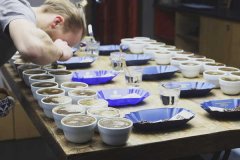
Some summaries of Qgrader examination for reference
After successfully passing the Q GRADER exam, some friends who are interested in the Q GRADER exam have asked me about the exam. It is true that there is less data in this area. Therefore, I would like to make a general summary here to give some reference to friends who want to take the Q GRADER. First, about the examination subject Q GRADER is an examination jointly certified by SCAA and CQI. At present, the examination will be arranged for 5 days.

Introduction to the flavor description of Colombian Yi coffee and the characteristics of varieties
The main varieties of Colombian coffee are small grains of coffee. Plants are small trees or large shrubs, 5-8 m tall, usually much branched at base; old branches gray-white, nodes dilated, young branches glabrous, compressed. Leaves thinly leathery, ovate-lanceolate or lanceolate, 6-14 cm long and 3.5-5 cm wide, tip long acuminate, acuminate part 10-15 mm long, base cuneate or slightly obtuse, rarely rounded, entire or
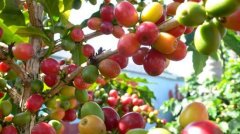
Colombian coffee species morphology coffee varieties boutique coffee beans China Coffee Network
The main varieties of Colombian coffee are small grains of coffee. Plants are small trees or large shrubs, 5-8 m tall, usually much branched at base; old branches gray-white, nodes dilated, young branches glabrous, compressed. Leaves thinly leathery, ovate-lanceolate or lanceolate, 6-14 cm long and 3.5-5 cm wide, tip long acuminate, acuminate part 10-15 mm long, base cuneate or slightly obtuse, rarely rounded, entire or

Barista examination some summaries of the barista Qgrader examination
After successfully passing the Q GRADER exam, some friends who are interested in the Q GRADER exam have asked me about the exam. It is true that there is less data in this area. Therefore, I would like to make a general summary here to give some reference to friends who want to take the Q GRADER. First, about the examination subject Q GRADER is an examination jointly certified by SCAA and CQI. At present, the examination will be arranged for 5 days.
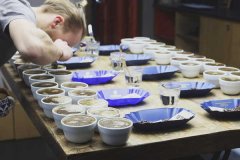
Some summaries of the Qgrader exam Coffee Cup Test
After successfully passing the Q GRADER exam, some friends who are interested in the Q GRADER exam have asked me about the exam. It is true that there is less data in this area. Therefore, I would like to make a general summary here to give some reference to friends who want to take the Q GRADER. First, about the examination subject Q GRADER is an examination jointly certified by SCAA and CQI. At present, the examination will be arranged for 5 days.

Basic course of Coffee flower drawing (6) basic exercises of Coffee flower drawing-Heart shape, leaves
Pull flower step 1, pull the heart-shaped practice is actually similar to the circle, but more than a closing action, after mastering the circle, it should not be difficult to master. 2. Put the milk pot close to the coffee surface when it is seven minutes full. 3. The milk foam will form on the coffee surface. 4. When the milk pot is almost full, raise the milk pot 5, push the milk pot forward, and make the tip form tips 1. Begin to take shape through control.

Colombian coffee bean Colombian species morphology Central and South American coffee beans
Species morphology the main varieties of Colombian coffee are small grain coffee. Plants are small trees or large shrubs, 5-8 m tall, usually much branched at base; old branches gray-white, nodes dilated, young branches glabrous, compressed. Leaves thinly leathery, ovate-lanceolate or lanceolate, 6-14 cm long and 3.5-5 cm wide, tip long acuminate, acuminate part 10-15 mm long, base cuneate or slightly obtuse, rarely round

Introduction to the flavor and taste of Colombian coffee with boutique coffee bean manor
The main varieties of Colombian coffee are small grains of coffee. Plants are small trees or large shrubs, 5-8 m tall, usually much branched at base; old branches gray-white, nodes dilated, young branches glabrous, compressed. Leaves thinly leathery, ovate-lanceolate or lanceolate, 6-14 cm long and 3.5-5 cm wide, tip long acuminate, acuminate part 10-15 mm long, base cuneate or slightly obtuse, rarely rounded, entire or
What kind of coffee bean is Huakui 6.0? Huakui coffee beans are sidamo producing areas? Introduction to the flavor and taste characteristics of soe coffee
Professional coffee knowledge exchange More coffee bean information Please pay attention to coffee workshop (Weixin Official Accounts cafe_style) Manor introduction How did the name of Hua Kui come from? In 2017, DW Green Bean Company of Ethiopia sent their coffee beans to the competition TOH (The African Coffee Association).
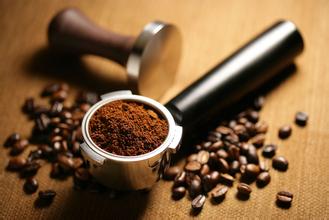
Introduction to the Andean Mountains in the main cultivated areas of coffee trees in Colombia
The main varieties of Colombian coffee are small grains of coffee. Plants are small trees or large shrubs, 5-8 m tall, usually much branched at base; old branches gray-white, nodes dilated, young branches glabrous, compressed. Leaves thinly leathery, ovate-lanceolate or lanceolate, 6-14 cm long and 3.5-5 cm wide, tip long acuminate, acuminate part 10-15 mm long, base cuneate or slightly obtuse, rarely rounded, entire or
When to drink coffee will not affect the night sleep.
The half-life of caffeine in the human body is between 2 and 12 hours. Although some of us metabolize caffeine faster than others because of genetic differences, the typical half-life of caffeine is usually about 5 hours, that is to say, caffeine generally stays in the body for 10 hours (or more) (technically, it takes up to 5. 5% to remove drugs from the body.

Introduction to Fine Taste treatment of Coffee Bean Grinding scale varieties in Columbia Hope Manor
Columbia Hope Manor Coffee Bean Grinding scale varieties taste treatment boutique introduction Colombian coffee varieties are mainly small-grain coffee. Plants are small trees or large shrubs, 5-8 m tall, usually much branched at base; old branches gray-white, nodes dilated, young branches glabrous, compressed. Leaves thinly leathery, ovate-lanceolate or lanceolate, 6-14 cm long, 3.5-5 cm wide, tip long acuminate
When do you drink coffee without affecting your sleep at night?
The half-life of caffeine in the human body is between 2 and 12 hours. Although some of us metabolize caffeine faster than others because of genetic differences, the typical half-life of caffeine is usually about 5 hours, that is to say, caffeine generally stays in the body for 10 hours (or more) (technically, it takes up to 5. 5% to remove drugs from the body.